Sunday, March 24, 2013

Staplers, Students, and Springtime

Sitting on my couch with a bad cold after a productive week with a lot of thinking involved, I am honestly up for something a little on the light side. So I decided to share a Twitter post from my Tweep @Citizenwald on my high school library blog and I'm sharing it here too. It's spring, and winter lingers...I figure we all need something a little quirky.

 1894_Gem_Paper_Clip_adv_discovered_by_The_Early_Office_Museum.jpg"Do you ever look at something and think, 'Now who first made one of those?' As a librarian and archivist, I love to contemplate how people come up with ideas and how they advance society. So, I got excited when I saw an article about staplers in the New York Times. (Yes, this is one of Ms. Mannon's quirks. I get excited about stuff like staplers.) But think about it...this little object helps keep us organized and we take it for granted every day. Before we had staplers, people used straight pins to clip things together. I know this from working for a long time in archives where I have seen many, many collections of old papers. After straight pins came paperclips, which took on many weird forms before someone, somewhere came up with the designs we find most recognizable today. Take a look at the NYT article, The Attachment That Still Makes Noise if you find these ideas intriguing. Think about what other every day objects have interesting stories about them. The simple tools that humans have come up with are really amazing! Maybe start your inquiry with those paperclips..."

I figured that this subject is a good way to get my students thinking outside the box and maybe even embarking on a little research. ;) Tomorrow, I'm talking to two classes about how to feel comfortable while doing an oral presentation. The life of a librarian / archivist is never intellectually dull.

Now, I just need to get rid of this nasty cold!

Sunday, March 17, 2013

Mustaches

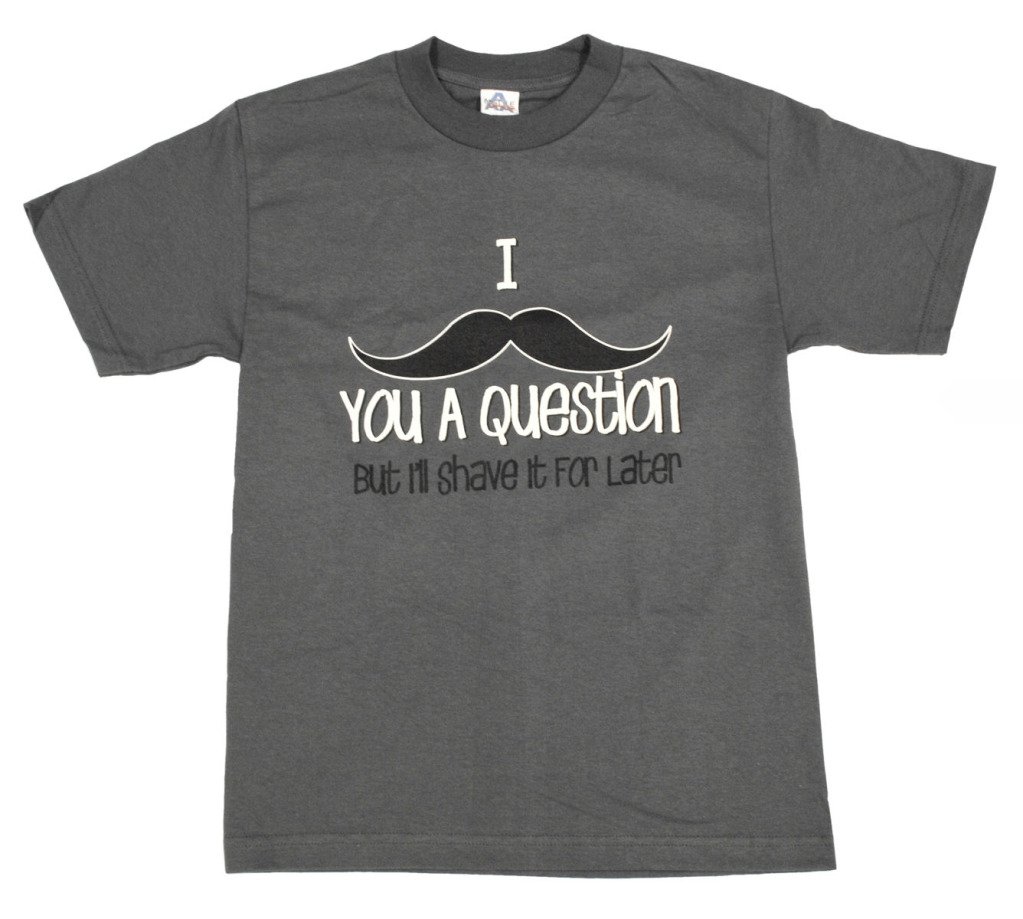
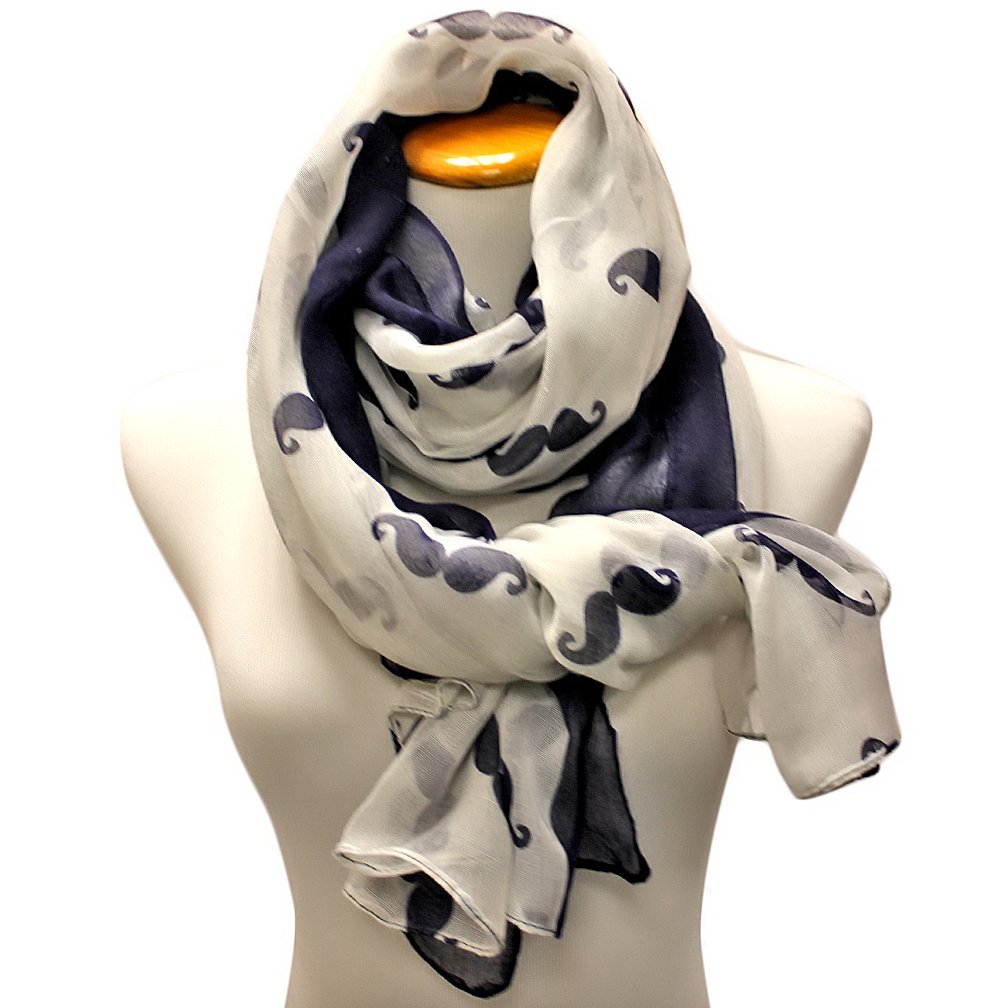
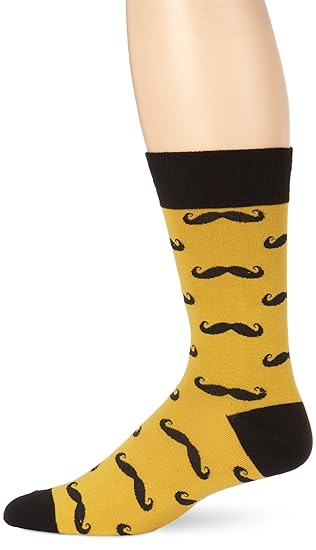
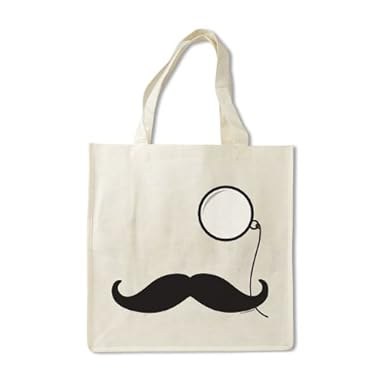
Walking through the mall last week with my daughter, I was struck by a fad.


[These images from Amazon. com represent the diversity of products related to mustaches]


With a little research, I found that I am way behind the times. This is apparently not a new fad....but I began wondering how such a fad can get started  because of course when I see this:

Product Details

I think of this:

Orphan photo of unidentified man with mustache


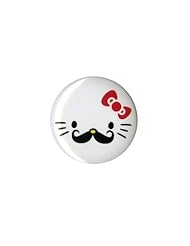
I am constantly reminded how archives, in the very broadest sense of the word, connects to just about everything. If I were still an archivist who managed nineteenth century collections, I would dig into my archives and exhibit more photos like this. I'd show my patrons how our mustaches beat them all. (Even Hello Kitty.) And how the fantastical relates to what is real. Who could adequately describe the fine gent pictured above? (He must be shown to be believed.) So, I challenge my colleagues to dig into your archives and jump on the mustache band wagon. And those of you with family collections, do you have a distinguised gent you would like to share? I've created a mustache album on the ArchivesInfo Facebook page and if you post an image on the FB site, I'll add it to the album. Please share whatever info you have about your photo because, of course, the context of the image adds so much to the image itself.


Want to learn more about the mustache fad? See these articles:
State of the 'Stache  from The Atlantic.
The Bearded Man. The Wallstreet Journal.


Sunday, March 10, 2013

Pinterest Revisited: Cultural Heritage Professionals Strutting Their Stuff

What does an archivist do aims to educate
about primary sources and the field of
archives management.
Since I first wrote about Pinterest over a year ago, the use of this unique tool has exploded in the cultural heritage field.  Pinterest is being used all of the ways that I suggested it might be useful: For collection sharing and collaboration; discovering the interests of your audience; sharing expertise; and generating dialogue. Pinterest has quickly become a favorite tool on social media and is being used in very innovative ways to promote cultural heritage and the businesses associated with it.

After my initial post, I wrote another one on "The Pinterest Experiment" and created the board "What does an archivist do?" A collaborative board with over 450 followers, the board has generated a lot of interest and discussion over the past year as I've tried to collaborate to "pin" information about my profession. My goal was to create a visually engaging introduction to the diverse field of archives. It was one of the first boards to try to find a way to share our profession using this new tool. I am now joined by many in the cultural heritage fields creating unique boards. This post highlights a few Pinterest efforts that I have found outstanding.

Rebecca Price of Chick History has recently created the board "The Historic Women of #STEM." It celebrates March as Women's History Month by highlighting a unique population. Her board taps into the month's theme, but also brings together a useful collection of biographies. For my own use, this collection will be a great resource for education.  I would love to see more boards like this that  highlight an aspect of information that can be used by educators.

Camille Breeze of Museum Textile Services has a fascinating collection of boards that reflect the field of textile conversation. One can learn about the history of textiles through subject focused boards that concentrate on such areas as "Historic Asian Textiles" or the "Historic Embroidery." Camille also includes a board dedicated to her company, allowing us to better appreciate her role in caring for this textile history.

The Museum of the White Mountains is a new institution that opened last month at Plymouth State University. Much to my delight, the museum has already begun using Pinterest to highlight its mission to preserve and promote the history, culture and environmental legacy of the White Mountain region. The set up of their board is thoughtful, providing insight into the "sense of place" offered by this unique, special place located in my state.

From the Library as Incubator
board, "Library Innovation"


The New England Museum Association has a rich collection of boards that highlights its members. Of special interest is their YEPs Resources board that aims to provide support to young and emerging museum professionals. The board offers advice for getting a job and growing a reputation in the field. It reflects the growing potential social media offers for thoughtful resources that can be applied to mentoring.

Always on the cutting edge of the library world, the Library as Incubator Project offers a collaborative board of library innovation. Fun, informative and diverse, the board brings together the best of the libraries. More of us should focus on the FUN and use new visual tools such as Pinterest to show how information is not only educational, but also entertaining and cutting edge.

This is just the tip of the iceberg! What boards do you like best? Please share your own comments and favorites.


Sunday, March 3, 2013

Exploring Context in Art: Putting Interpretation Under a Microscope

[Keeping my thoughts on this to blog post length has been difficult. I hope that it will serve as a platform for discussion.] 

I recently heard a radio program about artist Charles Krafft, considered one of the pre-eminent artists in the Northwestern United States. He has created Nazi imagery for some time and this work has been considered by art historians and collectors to be "ironic." According to a recently broken news account, Krafft has recently been found to be a Nazi sympathizer and the art world has been turned on its head trying to find a way to handle this scandal.

In the interest of full disclosure as related to this story, I will say that my grandparents escaped from the Holocaust and I have strong feelings regarding "Holocaust deniers." I will also announce my ignorance by saying that I had never before heard of this artist. I have always had a strong interest in the fine arts and with an undergraduate degree in art history, I even once considered a career path as an art historian. However, the subject of interpretation, especially considering contemporary art, has been something I have struggled with for a long time. This case highlights that struggle. It shows how much "interpretation" is based on the "facts" as we know them or as they are presented to us. How much do we really ever know?

To me, Charles Krafft's ideas about his own work shouldn't be the determining factor in deciding if his is art worth viewing. It seems to me that this is part of the problem here. My husband and I discussed this in the car after we heard the radio program. He seemed to think that this new found knowledge about the artist's views of the Holocaust should change our view of his work, whereas I think that this new knowledge should give us new information about the work, but shouldn't fully change it. Krafft's art went for shock value, but is he really talented? Search for images of his work and see what you really think without applying any of Krafft's suggested context to the pieces. [Even with the context I have trouble appreciating this work. It is certainly kitsch and I think combining kitsch with political statements has been way overdone...but perhaps that's just me. After all, I didn't become an art historian. My professor laughed at me for my apparently naive criticisms of many modern movements.]

Hearing this story as an archivist got me thinking about Hilary Jenkinson versus Theodore Schellenberg. Jenkinson believed that the creator of a collection of records was the one who should determine the value of the materials -- who should decide what should be kept as part of the historical record -- and that the archivist was merely a caretaker, whereas Schellenberg's theories promoted the idea that an archivist has an essential role in selecting materials worth keeping. I began to wonder, what role does a curator play? Perhaps this is unfair, maybe our professions shouldn't be compared in this way, but it is something that I have wondered for a long time...is it the role of the curator of contemporary art to listen to the creator of an artwork in order to care for it appropriately or should the curator evaluate the work on its own merit without the input of the creator? Do we know something is "ironic" because the artist says it is or do we know it's ironic because it's good art that somehow conveys the irony even without the artist pointedly telling us?

How does one's belief affect context? How should the artist's view of the world change our perception of his work? Is it possible for a curator to give context to art without the artist's input? If it's not, how much artist input is necessary? It seems to me that there was a bit of discussion about Krafft's world beliefs even before this story "broke." How far can, and should, a curator research to fully understand the context of what they are seeing. If we can, and do, evaluate context with older works of art -- by more objectively understanding the artist's life based on diverse archival documents and research materials -- why can't we do it with today's artist?

Once again, as always, it seems to me that archives have an important role to play in establishing context. I think we are at an important stage in our exploration of material culture. This case further demonstrates the value of cross-professional collaboration. The art historian cannot work in a vacuum with other art historians. Their work spans across disciplines. The Krafft dilemma sheds light on our times. It is a time when professionals are well-aware of the value of creating an image, a public face, in order to promote the work that they do. It is a time of complicated beliefs, polarizing opinions, multi-faceted interpretations of culture. Don't take what one tells you at face value. Dig deeper to fully explore context and be aware that what seems to be true may not always be so. How does one determine when context has been fully explored? I'd love to learn if others had alternate views of Krafft's work. I hope more diverse past interpretations of the art come to light and the story continues. I think we all have a lot more to learn here...

Saturday, February 23, 2013

Teaching Archives

Twenty young men and women sat giving me their full attention. There was no boredom in their faces. There were no food wrappers rustling. There were no whispers or tired empty stares. I decided to try it. It worked for adult audiences; why shouldn't it work on attentive teens? "Close your eyes...." I smiled, gently. "Go ahead. Everyone do it." And they did.

"Imagine a big circle in the center of your mind. Now see a line running through it. The circle is you. Everything to the left of the circle includes the people who came before you - your parents, your grandparents, your great-grandparents and the communities of societies that came before ours...now shift your attention to the right of the circle. Everything on the line to the right of you includes your kids, your grandkids, your nieces and nephews, your friends' kids and all the societies on whom you will have an influence. Everything that you do in your life helps build the future. You have the power to change societies. You are part of the line of history. History is not just about famous people. It is about you. Now open your eyes..." And they did.

...And this wasn't a history class. This was a marketing class. I was teaching social media strategy and using ArchivesInfo as a model. A powerpoint accompanied my talk about blogger, Facebook, Twitter, LinkedIn and the other platforms that I use to promote the work I do. Wrapped up in a talk about marketing my business was the theme of cyber safety. The documentation that one puts on the Internet will be there forever. "Most of the words you put out to the public as a teen will still be visible when you are an adult. I still see things I posted to forums twenty years ago as a young archivist when I look in search engines. Information does not vanish. Be careful what information you put out about yourself."

Of course, the work I do as an archivist is unfamiliar to my students. They know me as Mrs. Mannon, the librarian. Getting into the classroom has given me quite the opportunity to open their eyes to the idea and value of primary sources for documenting history. It is also helping me explain just what information and library science is all about. Information professionals are the keepers of ideas. One must carefully consider the documents that one creates, especially in a digital format, to manage one's identity and reputation.

Opening doors so that students can gain a full understanding of information in all its forms - from print archives to digital media  - is how I perceive my prime role as a high school information specialist. I mentioned in last week's post how I use exhibits to educate with primary source materials. In fact, archives are wrapped into most of the things that I do. Establishing a pen pal program allows me to show students the value of letter writing. Running a slideshow of photos I take of the students happily at work in the library shows how our images can bond communities. I displaying books in a different genre each month and accompany them with information about the people who have influenced that genre. This demonstrates how books are more than just the literature itself, but are also about the people who write it and the communities who are influenced by it - all backed up with primary sources.

Even a short note you write today may remain 100 years from
now among the archives that reflect your life. [This letter is
from the Lawton Collection at the Shirley Historical Society,
Shirley Massachusetts.]
I often hear that kids don't care about the past. They are not interested in their family history. They are not interested in antiques and old things. This is incorrect. It is not that they are not interested. It's that this generation needs to be taught the lessons in a different way. They want glitz. They want you to tie the idea directly to their lives. One can't just say, "this is important so learn it." One must show why it is important and show it over and over again from different angles. Archives are important because they are all around us. They influence everything. They inform us about everything, from the books you love to the messages you send friends to the letters you write to new friends around the world.

I don't think I heard the word "archives" until I was in college. I even worked in an archival setting in high school and I don't think the word archives was used. We need to change that. Today, because of computers, people think of "archives" as old newspapers or other old information found online.  Archives are so much more than that. As a teacher, I use the word as often as I can when describing a whole world of information out there to explore and create. Teaching archives means teaching about that information and how it affects youth today.  Teaching archives means teaching about how ideas across the timeline of history are created and transferred from one generation to the next.


Sunday, February 17, 2013

Exhibiting More Finds at the Local Antique Shop

This month, I am exhibiting the diary of Eileen Langmayd at the high school where I work as an information specialist. This is my 3rd exhibit relating to archives since I started in this position in September. One of my main goals at the school is to weave archives into our conversation so that our students understand the diversity of information and how different sources serve their research and their lives.

I am lucky to have a couple of talented assistants, including one who has a natural skill at display. I design the topic of the exhibit, provide some resources and information, and she has become the one to put up the display in an attractive way. Our exhibit focuses on the idea of lost information. It discusses how I found the diary in an antique shop and how I am attempting to find out more about the diarist. I make a connection between the 1930s teen writer who lived in a neighboring town and my students. I talk about the girl's connection to her community; how her diary entries reflect what was happening in Manchester, NH at the time and what was happening nationally, as the world was struggling through a Depression. The exhibit includes the diary iteself, photos of some of its contents, images of Manchester from the time, labels describing events and connections, and books shedding light on the times.


The exhibit includes simple straightforward label copy that tries to introduce students to primary source materials in the context of the history they illustrate.


The exhibit caught the attention of a faculty member who hopped on Ancestry.com to find out more about the diarist. He learned when she was born, when she was married, and other vital statistics. He learned that she had no children and this is a key clue to understanding how her materials ended up in an antique shop. He kindly e-mailed me his findings.


Census information and photo of Eileen Langmayd's school shared with me by a colleague.

I look forward to continuing to share my antique shop findings with my students and colleagues. I think archives are perfect for illustrating the value of "close reading." Illustrating the value of archives, More Finds at the Local Antique Shop continues to share interesting materials with a diverse audience. I have more to share about Miss Eileen as I continue transcribing her work, but I look forward to my next find! It's time to hit the shops once again. 


Saturday, February 9, 2013

What Should Archivists Stop Doing? [Response to question posed at ArchivesNext]

My colleague, Kate Theimer at ArchivesNext posed interesting questions earlier this week on her blog: "What should archives or archivists stop doing? What should we drop?" It's an interesting inquiry that takes a thoughtful response. It feeds into the heart of my own work as archivists and "information professionals." The following post includes most of the comment that I posted on the ArchivesNext blog and elaborates by using my work as an example.

Explaining the role of an archivist is a key to the success of our profession.
http://pinterest.com/melmannon/what-does-an-archivist-do-/
First, for those who are unclear about the role of the archivist, take a look at my 2011 post on "What is an Archivist?" from #AskArchivists day in June that year. To further clarify our role, I maintain a Pinterest board called "What does an archivist do?" that links to photos and articles that explain the diversity of archives.

...The best thing that an archivist can do for the profession is to get “archives fans.” I think that we all do a lot as archivists. I think that what we do is important. I think that we need to do a lot more and need more support to do it. We need to get buy-in from our communities. We need to show young people that what we do is awesome. We need to get young professionals to want to help us, either by becoming archivists or using their skills to help archivists. In addition to processing, digitization, etc. etc. we need to brush up on our public relations skills. We need to do more outreach and teaching. We can use others who specialize in these areas (people with MBAs etc.) to help us. We need to reach out to other professions that are similar to ours that may do a better job at certain things than we do. Cultural heritage professionals should help each other. Librarians, museum professionals, and archivists should share notes and expertise. While valuing our own skills is important and certification is lovely, I think we need to spend more time learning about the world beyond archives and adapting our work to collaborate with others to make our profession truly 21st century ready. What should archivists stop doing? I agree with most of the posts here. People want information to be accessible, easy to use and understandable. We should work harder to give them that and look beyond our own institutions to achieve that. Rather than closing up the profession and demanding certain skills, we should broaden our profession and appreciate skills that other professionals can bring to our work.

As a consultant, I have spent the past ten years trying to bring together archives, libraries and museums to share expertise. More recently, I have worked with individuals to show how the materials they have in their homes are important; to help them care for these materials; and to show them how to reach out to cultural heritage institutions to share resources. This September, I began working as a high school librarian / information specialist. To many, this shift may seem odd, but it really speaks directly to this question. In this capacity, I have introduced a school archives, I regularly exhibit displays about primary sources. I teach high school students and teachers how archives and published materials can be used to not only write a good research paper, but to get a better understanding of the world. When it comes right down to it, isn't that the main reason we keep archives? To better understand societies?

So what should we stop doing? I would rather reverse this and ask, what should we be doing? We should be doing everything that we already do and more. We should be reaching beyond our institutions' walls and beyond our profession to approach broader communities that can enhance our work and broaden our own perspectives. Only by being more open, approachable and interesting to the general population can we help people to realize just how important the work of an archivist is to everyone, in all societies. This will keep us relevant and will keep our work moving ahead. Caring for the overabundance of information in this age is beyond the work of the archivist. Collaboration is key.