Yesterday, I brought my bag of props to my daughter's first grade class to teach eager six, seven, and eight year-olds about what I do for a living. I think my experiences might help other archivists who want to reach out to this age group. We often ignore little children with our work, but I think it is well-worth our effort to try to turn kids on to history and archives at an early age. I brought to the class:
1. Photos of a baby girl and baby boy from the early twentieth century. (Both children wore dresses. The girl had a bow on her head.)
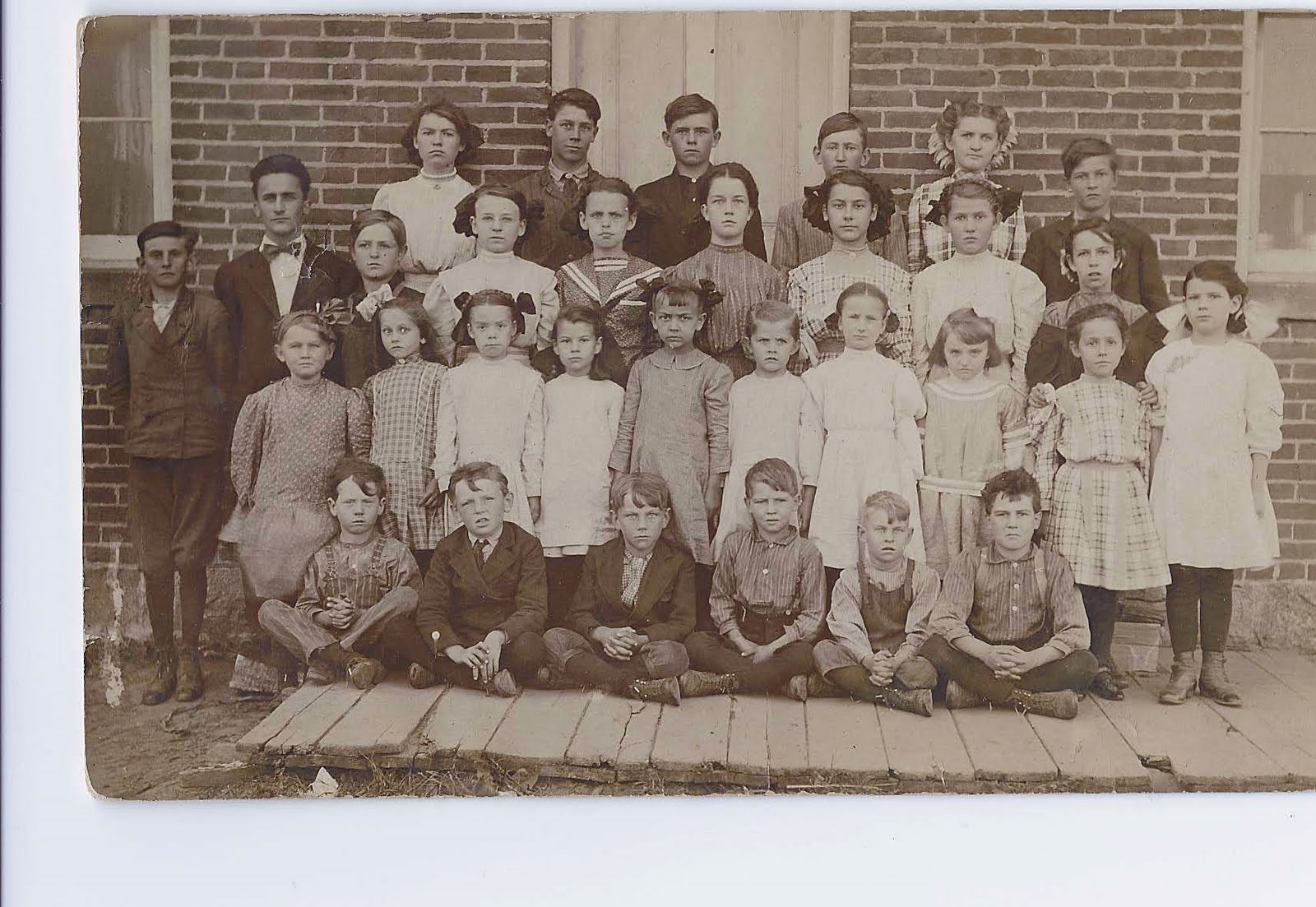
2. Photo of turn of an elementary school class at the turn of the twentieth century
3. Photos of mothers and fathers with their children.
4. Archives Gloves
5. An eighteenth century receipt
6. A word board for unfamiliar vocabulary
7. Bookmarks
8. A collage with the word "history" that showed historical images
9. A coloring page of a one room schoolhouse
10. An oral history worksheet
I tried to theme the 1/2 hour talk around "History is fun," and used the idea of birthday parties to help drive home some points threaded throughout the talk. As you can see, I began this focus with the bookmarks. My daughter told me that other parents who came in to speak about their jobs brought in things for the kids -- toothbrushes from the dentist, a lightbulb keychain from the engineer... My daughter, avid reader that she is, requested that I bring bookmarks.
My word board was the old fashioned flip-chart style and the first word I presented was "history." I asked the kids what that word means. The first child to respond told me that it means, "things that happened a long time ago to people who are dead." I told him that history could have happened a long time ago, but we are part of history right now. Another running theme I adapted was how history relates directly to each and every one of us. I told the kids that each of us has a history. The things we remember are history. Things that are important to us like birthday parties are part of history. My "history" word board included a college. I had a photo of Babe Ruth, the constitution, a rigged ship, Fred Astaire and Ginger Rogers, an old sheet of music notes, an old circus program, and a photo of a government official standing with other men in suits in front of a giant birthday cake. I told the kids that history includes everything. Famous people and not so famous people are part of our history and history includes all of our favorite things. The class had just completed a math lesson with their teacher and I threw in that even math has a history. I mentioned American Girl dolls and how the stories teach us history, but backed off quickly when the boys started yelling, "I don't read that!" I need to find a better literary example for them.
I then flipped my chart to the words "archives" and "archivist." I asked the kids how we knew about history. They told me that they knew it from books. I asked, "but how do the people who wrote the books know about history?" I explained the word "archives" and said that most people think of archives as things in libraries and museums, but we also have archives in our home. I asked if anyone kept a journal and eager hands shot up. I asked if anyone had pictures from their sporting events. I asked if their parents kept the special drawings that they made at school. I quickly threw in the words "document" and "record" and hoped it stuck long enough to make a point at the end of my presentation about recorded information. Then, my daughter's wonderful teacher asked if videos taken at birthday parties would be archives too. (Mrs. G is the greatest teacher!) YES! I had drawn a little picture of myself under the word archivist with an arrow and label that said "me." They seemed to like that a lot.
The gloves came out then. They had been stored in plastic ziplocs for about two years. Here's an interesting point, don't store your archives in ziplocs and don't store your cotton gloves there either, especially if kids are going to be using them. They apparently had an odor from off-gassing plastic. The kids loved putting on the gloves, but then the chain reaction of, "my gloves smell!" "EWWW, mine smell too!" began. Once we got that settled down (I later explained to Mrs. G that she could tell the kids that their gloves could be put in a regular washing machine), the kids were eager to look at the items I brought while wearing their gloves.
The photos were a big hit and I got the expected reaction regarding the boy in a dress. I had the kids look at the clothes in other images carefully. I showed an image of a family with a blurred little boy and explained that in early photography, the picture took a long time to take. It was not just a quick click and that's why the boy was blurry. He didn't stand still long enough. Later, a question was posed about why people in the photos didn't smile and I explained that it was much harder to hold a smile for a long time than a non-smiling expression.
My final item was an early nineteenth century receipt. One student's hand immediately went up in the air and he said, "I know what they wrote with! They had feather pens and bottles of ink." The kids examined the paper and I noted that its texture is different from most of the paper today. One girl smelled it and said that it smelled funny like the gloves.
My final flip chart words were "preservation" and "oral history." I asked if they knew what preservation meant and they related it to nature. I talked about preserving the earth meant you were help it to last for a long time and that's what archivists do with archives. I explained that the gloves are part of the effort to preserve things by keeping grimey hands off them. Then I asked what would someone do if they didn't have records or documents about an event. What if no one brought a camera to the birthday party? Also, how could you find out information about someone you loved if they didn't write it down? We talked about how "oral history" could help us make written information that doesn't exist and that by asking questions we could learn a lot. I then handed out a list of questions and suggested that the children go home and ask a loved one to give them answers to things such as "When were you born" and "what was your favorite game to play when you were a kid?"
For my final point an

d my final attempt to relate history back to the kids, I brought out a picture of a class from one-hundred years ago. I had shown this image earlier in the presentation, but it seemed worth emphasizing to help the kids relate archives back to themselves. Mrs. G again helped out by telling the students to think of their own class photo and compare. I then told the kids about a one room schoolhouse and how kids of all different ages would learn together. I handed out coloring pages of a one room school house and asked the kids to draw images of themselves and their friends standing next to the school house in the outfits they had seen in the pictures that day and then color them in.
As the children were coloring, Mrs. G asked lots of questions about my work. Who do I help with archives and what exactly do I do for them? It was nice to feel like I piqued the interest of students AND their teacher too. I think that this presentation would have worked better with more time, but I think that the content hit the mark. They understood the main points. They could see how history was relevant to their lives. They understood that history could be fun and interesting, encompassing all kinds of wonderful subjects.
 The Albert Ryan Collection found a home at the Waltham Public Library when a local citizen with some remarkable ancestors talked to me (the library's archivist at the time) about his family papers.