Tuesday, May 18, 2010

More antique shop finds

Check out my latest antique shop finds and share your thoughts.

Are you a collector? What objects interest you? How do you form your collections and pursue purchases? -- by theme? by what strikes you fancy at any given moment? a good value?

I have many small collections. My latest pursuit is old photographs. I choose those that are unusual or have a story to tell. I like evaluating how the images fit into history and try to glean information about the subjects. With some I feel an immediate connection. I have a small, but growing collection of mother and child images that fill this category.

I have recently begun collecting stereoscopic images to share with my daughter. We look in shops and on the Internet for images of places around the world that interest us. It is a great way to share a passion for history and photography while pursuing an educational activity with a young one.

Sometimes I purchase items specifically for archives and preservation classes. Though I suspect I am in a very small minority among collectors who are doing this! If I spot an unusual preservation issue or a type of document not represented in my collections I will try to purchase it as an example for future workshops.

See this interesting article, An Interview with 19th Century Photograph and Americana Collector Wes Cowan, for another perspective on collecting photos and antiques.


Friday, May 14, 2010

Making the Past Seem Real to Children Part 2

Yesterday, I brought my bag of props to my daughter's first grade class to teach eager six, seven, and eight year-olds about what I do for a living. I think my experiences might help other archivists who want to reach out to this age group. We often ignore little children with our work, but I think it is well-worth our effort to try to turn kids on to history and archives at an early age. I brought to the class:

1. Photos of a baby girl and baby boy from the early twentieth century. (Both children wore dresses. The girl had a bow on her head.)
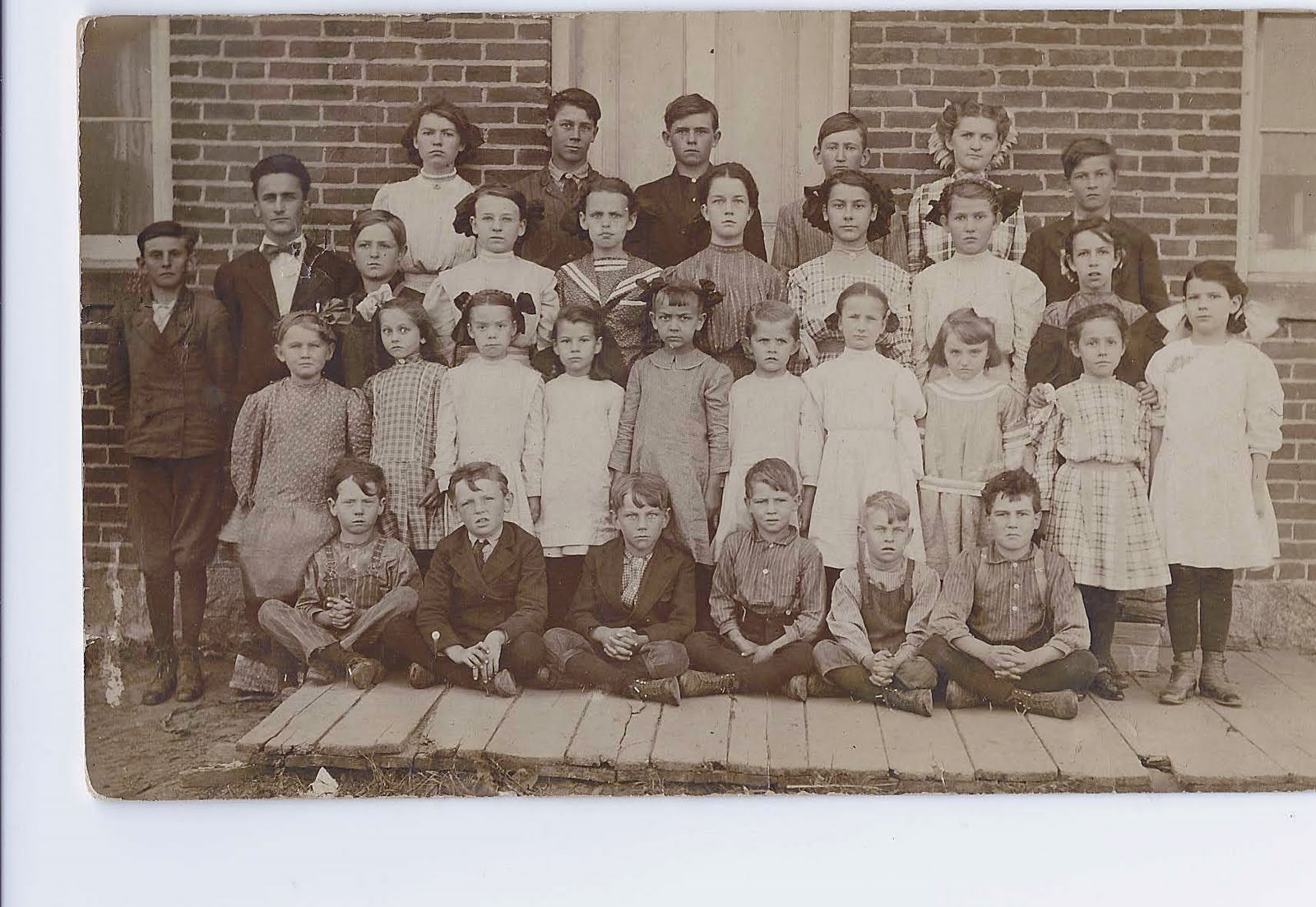
2. Photo of turn of an elementary school class at the turn of the twentieth century
3. Photos of mothers and fathers with their children.
4. Archives Gloves
5. An eighteenth century receipt
6. A word board for unfamiliar vocabulary
7. Bookmarks
8. A collage with the word "history" that showed historical images
9. A coloring page of a one room schoolhouse
10. An oral history worksheet

I tried to theme the 1/2 hour talk around "History is fun," and used the idea of birthday parties to help drive home some points threaded throughout the talk. As you can see, I began this focus with the bookmarks. My daughter told me that other parents who came in to speak about their jobs brought in things for the kids -- toothbrushes from the dentist, a lightbulb keychain from the engineer... My daughter, avid reader that she is, requested that I bring bookmarks.

My word board was the old fashioned flip-chart style and the first word I presented was "history." I asked the kids what that word means. The first child to respond told me that it means, "things that happened a long time ago to people who are dead." I told him that history could have happened a long time ago, but we are part of history right now. Another running theme I adapted was how history relates directly to each and every one of us. I told the kids that each of us has a history. The things we remember are history. Things that are important to us like birthday parties are part of history. My "history" word board included a college. I had a photo of Babe Ruth, the constitution, a rigged ship, Fred Astaire and Ginger Rogers, an old sheet of music notes, an old circus program, and a photo of a government official standing with other men in suits in front of a giant birthday cake. I told the kids that history includes everything. Famous people and not so famous people are part of our history and history includes all of our favorite things. The class had just completed a math lesson with their teacher and I threw in that even math has a history. I mentioned American Girl dolls and how the stories teach us history, but backed off quickly when the boys started yelling, "I don't read that!" I need to find a better literary example for them.

I then flipped my chart to the words "archives" and "archivist." I asked the kids how we knew about history. They told me that they knew it from books. I asked, "but how do the people who wrote the books know about history?" I explained the word "archives" and said that most people think of archives as things in libraries and museums, but we also have archives in our home. I asked if anyone kept a journal and eager hands shot up. I asked if anyone had pictures from their sporting events. I asked if their parents kept the special drawings that they made at school. I quickly threw in the words "document" and "record" and hoped it stuck long enough to make a point at the end of my presentation about recorded information. Then, my daughter's wonderful teacher asked if videos taken at birthday parties would be archives too. (Mrs. G is the greatest teacher!) YES! I had drawn a little picture of myself under the word archivist with an arrow and label that said "me." They seemed to like that a lot.

The gloves came out then. They had been stored in plastic ziplocs for about two years. Here's an interesting point, don't store your archives in ziplocs and don't store your cotton gloves there either, especially if kids are going to be using them. They apparently had an odor from off-gassing plastic. The kids loved putting on the gloves, but then the chain reaction of, "my gloves smell!" "EWWW, mine smell too!" began. Once we got that settled down (I later explained to Mrs. G that she could tell the kids that their gloves could be put in a regular washing machine), the kids were eager to look at the items I brought while wearing their gloves.

The photos were a big hit and I got the expected reaction regarding the boy in a dress. I had the kids look at the clothes in other images carefully. I showed an image of a family with a blurred little boy and explained that in early photography, the picture took a long time to take. It was not just a quick click and that's why the boy was blurry. He didn't stand still long enough. Later, a question was posed about why people in the photos didn't smile and I explained that it was much harder to hold a smile for a long time than a non-smiling expression.

My final item was an early nineteenth century receipt. One student's hand immediately went up in the air and he said, "I know what they wrote with! They had feather pens and bottles of ink." The kids examined the paper and I noted that its texture is different from most of the paper today. One girl smelled it and said that it smelled funny like the gloves.

My final flip chart words were "preservation" and "oral history." I asked if they knew what preservation meant and they related it to nature. I talked about preserving the earth meant you were help it to last for a long time and that's what archivists do with archives. I explained that the gloves are part of the effort to preserve things by keeping grimey hands off them. Then I asked what would someone do if they didn't have records or documents about an event. What if no one brought a camera to the birthday party? Also, how could you find out information about someone you loved if they didn't write it down? We talked about how "oral history" could help us make written information that doesn't exist and that by asking questions we could learn a lot. I then handed out a list of questions and suggested that the children go home and ask a loved one to give them answers to things such as "When were you born" and "what was your favorite game to play when you were a kid?"

For my final point and my final attempt to relate history back to the kids, I brought out a picture of a class from one-hundred years ago. I had shown this image earlier in the presentation, but it seemed worth emphasizing to help the kids relate archives back to themselves. Mrs. G again helped out by telling the students to think of their own class photo and compare. I then told the kids about a one room schoolhouse and how kids of all different ages would learn together. I handed out coloring pages of a one room school house and asked the kids to draw images of themselves and their friends standing next to the school house in the outfits they had seen in the pictures that day and then color them in.

As the children were coloring, Mrs. G asked lots of questions about my work. Who do I help with archives and what exactly do I do for them? It was nice to feel like I piqued the interest of students AND their teacher too. I think that this presentation would have worked better with more time, but I think that the content hit the mark. They understood the main points. They could see how history was relevant to their lives. They understood that history could be fun and interesting, encompassing all kinds of wonderful subjects.

Tuesday, May 11, 2010

Making the Past Seem Real to Children

I was invited to my daughter's school to teach her first -grade class about my occupation. From my 6 year old daughter's enthusiastic recall of other parents' presentations, I know that my talk is following these parents who have already spoken to the class: a police officer, a dentist, and an engineer. Regarding the engineer, my little student reported, "Mommy! He brought us lightbulb key chains!" I am bringing in archives gloves.

I feel a responsibility to my profession related to this upcoming presentation. 1. I fell in love with history in the 5th grade. 2. I indexed the scrapbooks at the Vanderbilt Mansion in Centerport NY as part of an honors project in high school, but I don't recall learning the word "archives" until college. I wonder how many budding archivists whose attention I can capture at a very early age.

In an effort to back up any observations I make in this post with data, I did a little research and ran into this article, Teaching History in the Elementary School http://www.ericdigests.org/pre-928/history.htm . I am troubled by what it seems to tell me, namely that educators don't think students are ready for history in elementary school and that not enough research has been done to support this belief. Am I misinterpreting what the writer is saying?!

My daughter is an American Girl fan. So am I. I have never seen anything that has so effectively opened a young girl's eyes to history. A couple of years ago, my little one discovered the American Girl books before she discovered the dolls. She realized that the people about whom she was reading were different from her -- they wore different clothes, ad different beliefs and experiences. She and I sat down to talk about why. I made a family tree that showed her relatives back to grandma and grandpa. I showed her on our genealogy chart that her grandparents were born a little after the story of the American Girl depression doll, Kit, took place. I told her that my early childhood took place when Julie's story did - in the age of bell bottoms. She understood and was eager to learn more. She could identify with the stories and could relate them back to herself and the people she knows. We then started going back farther and learning about the Victorian doll, Revolutionary era doll and others.

My daughter learned about Native Americans from New Hampshire in school last autumn. We went on a field trip to see a museum about them and a replica of their home. My daughter got to try on an outfit like a girl her age living in the woods a few hundred years ago would have worn. I have not heard about another similar lesson in her classroom since that time. Is teaching history in elementary school lagging? Is teaching history secondary to reading, writing and arithmetic at this point? I hear about her math and reading projects everyday. Should these take precedence? Do we just think that kids won't be able to grasp the concept of history as the aforementioned article seems to suggest?

I am heading into the classroom wondering if I can specifically teach archives and relate it to history. (At least the kids will learn to recognize the word "archives" before I did.) I plan to introduce 5 vocabulary words and concepts: history, archives, archivist, preservation, oral history. I will ask "what is history and how do we know about it?"
- I have a box of old photos of children and families as well as some other interesting old documents that I can show the students. (They can look at little boys in funny dresses and laugh about how even boys once wore dresses.) I carry mementos found on trips to antique stoes in an archives box. I can use them to talk briefly about how to preserve and organize items that are important to their families. They can wear the archives gloves so they can feel like real archivists.
- I will focus on the types of historical materials kids can find around their house and what they tell about their families...they can learn things from these materials such as what their parents were like as kids or even favorite family recipes.!
- I'll also mention how libraries, archives and museums keep records like they have in their home to tell stories about people. These stories are our history.
- I'll talk about how many things that are important to us are not recorded - maybe no one took pictures of that day or wrote an e-mail about an experience. Maybe someone forgot to bring a camera to take a picture of a first soccer goal or recital. When this happens, we can write down something about the event to help us remember -- maybe keep a journal.
- We can also learn about the lives of other people by asking questions and writing down the answers so others can learn about them too. I'll have handouts of questions that the kids can bring home to ask a family member or friend to do an oral history.

I'll report back my own findings at the end of the week. Stay tuned...

Thursday, May 6, 2010

Participatory Archives and Face-to Face Communication

Andrew Flinn's 'An attack on professionalism and scholarship'?: Democratizing Archives and the Production of Knowledge discusses the value of community archives and the desirability of encouraging a participatory archives model. Flinn passionately argues for the need to shift the professional archivist's thinking to include the role of the non-professional, interested citizen, to advance the work that archivists do. Embracing democratization (or democratisation with respect to my English colleague) in the archives means giving users and potential collaborators a sense of ownership in the work that we do. Flinn notes that "...archives held in the community could be as important as those held in public archives." He advocates for persuading communities to share their knowledge and that specialists in diverse fields often have a better understanding of the materials held in cultural repositories than those who are charged with caring for those materials.

Flinn seems to present a challenge in the second half of his article, if you subscribe to the idea that the next step for archives is to be more inclusive and participatory, the next step to consider is how to encourage those outside of the archives to buy-in. In my opinion we must convince potential collaborators that: 1. We value what they say. 2. We are actively listening to their input 3. Their input is being put to good use.

Flinn discusses some of evidence of success in online collaborative initiatives such as The National Archives' (UK) "Your Archives" project, while earlier in the article he notes that "...in themselves, new technologies do not guarantee such a transformation [to democratic impulses]."
Once again, I find myself struggling with ideas of old and new. Technology is not the only input into the community we need to consider. While it has great benefits for archives in terms of access and reaching users we may not otherwise have reached, we cannot abandon successful methods that do not relate to computers and digitization.

In tandem with Flinn's article, I am reading Nina Simon's "The Participatory Museum." Her book emphasizes how different users may need different entry points into a museum. While one may feel comfortable walking through an exhibit with a brochure in hand, another may want an audio guide. Another person may want an activity that invites them to interactive with the exhibit to keep them engaged. With this in mind, we need to consider alternative means to invite individuals to participate.

Many of the people with whom I work are not Internet savvy. In fact, many need to be cajoled into going near a computer and just trying it. It is not effective to try to convince them of the value of using a computer while at the same time convincing them of the value of archives. Perhaps in a generation or two this will change and everyone will be comfortable with a computer. When that happens, and as technology advances and the becomes more personalized, the multiple access points we use for participatory archives will need to be revisited. For now, as my blog title today suggests, we must not abandon face-to-face communication. And for those of us who have never tried getting out of the archives and into the community, now would be a good time to do it as we explore the ideas of "participatory" and "crowdsourcing."

Encouraging users to bring their archives and their ideas to professionals through thoughtful programs is one way to make outsiders feel welcome. Public speaking, networking, attending community events and just making ourselves visible is still the best way to increase trust and participation. Telling individuals face-to-face that they are important, that the histories of their families are important, and that the records they hold in their possession are important, is vital to successful collaboration and democratization of our work. If we can reach out in-person, we can show that we are listening and valuing the individuals in our community, and we will receive the support and collaboration we seek.

Our challenge then becomes putting the buy-in to good use. What kinds of collections, programs, additional access points, exhibits, etc. can we create with our new non-professional partners to show them what they say matters? Rather than creating the programs FOR an audience first and hoping they will come, this shift in thinking will allow us to create programs WITH our audience, truly democratizing what we do, while highlighting our community and civic roles, and ultimately strengthening us and our purpose.

Monday, May 3, 2010

Making Personal Connections to History

Interacting with original historical materials available in repositories helps an individual identify his place in society and create personal connections to the past. Archival records reflect humanity and allow readers of documentation to relate to historic events and the people who played a part in them.

Two news stories over the weekend demonstrated this point:
Dad's gift of learning pays off in fictional Civil War novel set in Springfield http://bit.ly/ch0b22 (News-Leader.com, Springfield Missouri,
Google is not the last word in information http://bit.ly/b2Styz (The Sydney Morning Herald, April 29, 2010)

The stories discuss how separate boys made profound connections to archives. They learned that the writers of original documentation recorded personal experiences of historic events that could not be re-created in another form.

The implications of this are far-reaching. For one, as more and more libraries and archives have funding cut, fewer and fewer people will be able to experience that direct link to history. The feeling of touching an original manuscript and knowing that a person who lived hundreds of years ago also touched it cannot be duplicated. While we may be able to copy the informational value of a document, we cannot reproduce its inherent feel or smell that awaken the senses and stretch our imaginations. An examination of an original also promotes self-discovery, allowing us to see the minutiae that can be missed in copies. The environment in which one "experiences" a document is also lost -- admittedly sometimes for better (for those who want to argue that point,) but also sometimes for worse.

As we move farther away from original research, we are allowing are youngsters to think that everything there is to be had is available on the Internet. While we fret about the younger generations losing face-to-face social connections to their preference for texting, we should also be concerned about losing touch with heritage items. The uniqueness of individual historical documents in their form and function is lost. The question of how a document arrived in a repository, though not always prompted by archivists, is arguably an inquiry more readily raised by a researcher in an Archives than one viewing the document on the Internet. The provenance of the document, including who owned it and the path it took to be placed before one's eyes at this very moment can be powerful.

This is not a rant against technology. In fact, I think that technology can often be an important first step toward encouraging an individual to make a personal connection to history. More people than ever before have access to the information found in documents because of the Internet. It is also a powerful tool for encouraging exploration through collection guides, lessons, and stories about the use of archives. It also allows us to cut down on the use of fragile documents that can be damaged by excessive handling. However, digitization of archives should take place hand in hand with the care of original resources. Individuals also should be encouraged to interact with originals whenever possible. It is akin to understanding from where our food comes. If we don't understand that archival repositories exist to care for materials and to provide access to them, why should we value them? Why should we want fresh fruit instead of canned?

I carry a box of materials around with me for presentations. (Regular readers of my blog know that I like to frequent antique stores and pick up interesting bits on my visits.) Whenever I pull the box out for my students and audiences, the first thing they want to do is to touch the items. In a presentation to an adult audience yesterday, a woman in attendance remarked that a 19th century receipt that I had was written with a brown ink similar to a family Civil War document she had in her possession. She asked how they made ink then. She began wondering out loud if the soldier in her family might have made the ink with a natural material he found rather than carrying a bottle with him. We also noted the differences between the old paper and papers made in the twentieth century. We noted deterioration as well as content. I then pulled out a school girl's autograph book from the late nineteenth century. They commented on the small size of the object and remarked that the book reminded them of similar books they kept as youngsters... These are observations that are best made when the original is present and accessible to the viewer.

The final point to take away from these discussions, and from the weekend's articles, is that making personal connections to history is easy when the public is given the opportunity. Archivists and related professionals are challenged to create such opportunities that will appeal to wide-ranging audiences.

Thursday, April 29, 2010

Valuing the Non-professional Archivist

Professional astronomers value amateur astronomers...should archivists follow their example?
***

I was inspired by a show about the night sky at my local planetarium that briefly discussed how non-professional astronomers have propelled science through wide-ranging amateur exploration. The help of these amateurs has effectively given professionals extra sets of eyes, allowing them to see things that they otherwise may not have had time to locate. We similarly have the potential to expand our archives universe (so to speak) by seeking interested non-professionals who can help archivists identify and care for important archival sources in places we don't have time to reach or cannot access.

Online sites like the Astronomy Zoo encourage amateur exploration and invite the layman to help astronomers with their mission. The site opens and immediately encourages those interested in the science. It reads "Welcome to Galaxy Zoo, where you can help astronomers explore the Universe." It then discusses how individuals can help scientists, what has been achieved to date, thanks the viewer for his help, and ends by declaring "happy classifying!" (Who wouldn't feel wanted and eager to help at that point?)

Similarly, the ecology site Opal invites those interested in wildlife to "find, study, and record nature in your local area." Imperative statements such as "Download a free survey pack and get involved today; Learn more about the water survey; Enter your results online; Find out about other OPAL surveys" encourage those exploring the site online to actively participate, learn more, and become engaged with Opal's cause.

Similarly, a few years ago, I discovered the Great Sunflower Project to help the scientists count bees and gather information that would help ensure the survival of vital bee populations. It seems that the idea of the "Citizen Scientist" is alive and well across the Internet.

Like scientists, archivists need to recognize how partnerships with non-archivists can assist our goals. In fact, we can not be fully successful at our attempts to document our areas of interest without help from non-professionals. We also cannot sustain our work without raising awareness and encouraging an appreciation for our field and the resources for which we care. Active, hands-on, in the field work by non-professionals who have ready access to resources which archivists may not be able to locate on their own is key to the success of archives management. An archivists potential resources can be found in virtually every home, association, and business in the Western world and often remain undiscovered by "experts" and therefore lost to history. Archivists would be greatly empowered by seeking assistance from our local communities and encouraging non-professional (dare I say "Citizen?") archivists who can provide our field with its own extra eyes.

(Thank you to my Twitter friend and overseas colleague Anna McNally, History Project Archivist at the University of Westminster, for supplying telling me about the Astronomy Zoo and Opal sites. Yesterday, I mentioned on Twitter that I was inspired by a recent trip to the Christa McAuliffe Planetarium in New Hampshire and Anna immediately responded that she was attending a presentation about the subject on that very day. Science lecturer Alice Bell was the presenter at her session.)

Wednesday, April 21, 2010

Archives, Archives Everywhere - NAPO

Last night, I had the honor of being the guest speaker at my local NAPO chapter. The National Organization of Professional Organizers is a diverse group that help people save time and money while aiming to reduce stress through organization. Organizers can help people arrange such things as their thoughts, their closets, their personal financial systems and their personal papers. They help people appraise their items by deciding what to keep and what to toss and how to successfully take charge of their lives. The work that archivists do go hand in hand with the organizers and we would do well to explore the possibilities of collaboration with them to secure our recorded history.

Organizers are in the trenches, so to speak. They get an inside look into personal materials that many archivists never see. While we may be aware that many people have valuable historical records, archivists often have a hard time reaching out to explain this to the public. While we are outsiders trying to abstractly explain why grandma's letters from the war are valuable to posterity, organizers are hands-on. They are sorting and advising the general public about what items they should keep and throw away. They may hold grandma's letters in their hands at a crucial disposal decision moment. We need to make organizers more aware of what archival repositories do so that they can refer clients to us when appropriate, so that we have better access to community documentation and will be better able to collect a full documentary record. At the very least, we can reach out to organizers and encourage their clients to talk to us, so we become aware of materials in homes and have greater knowledge of the extent of historical documentation that exists.

For our part, archivists have a lot to offer organizers in the way of appraisal, organization, and preservation. Last night, I spoke to the Manchester, NH chapter of NAPO and discussed how we place value on records. I talked about the fields of records and archives management and the value of thinking about the record lifecycle. I discussed informational, evidential, and intrinsic value. I talked about the value of original, one of a kind documents. I discussed how archivists place value on organizing collections by record creator. Then I presented basic information about preservation and introduced the storage suppliers archivists use to ensure the safety of our materials.

I am anxious to learn more about the organizers and what they do. Each of the members of the Manchester chapter has a niche and is expert at managing different organizational problems. I'm sure I will glean a lot from their examples and I hope that my fellow archivists will reach out to their local chapters to do the same.

Thank you to all of the women in the NAPO - Greater Manchester chapter who were so welcoming last night! I am energized by your questions, discussions, and enthusiasm!