Any recognized gap between the fields of library science and archives management is becoming smaller. Yes, archivists and librarians handle
different sorts of objects. Yes, each field requires its own specialized
training. Yes, we often work in diverse institutional settings. ..Yet our
materials take up the broad category of "information." And with the
Internet, the diversity of our information does not quite make itself as
clear to our patrons as maybe it once did. While it is important to maintain a distinction between primary and secondary sources, it is more important than ever that librarians and archivists learn more about the other profession's expertise to best serve our patrons.
Archivists should better
understand what researchers are seeking when they write term papers or
approach a library (or the Internet) to find information that serves a need in daily life. The archives has much to offer the general
populace. As archivists, we should no longer view the academician as our most important patron.
We must better serve a diverse populace to survive and thrive.
Once upon a time, preservation was a good reason to discourage
wide-ranging use of our materials. We could not keep everything safe if
hundreds or thousands of people clamored to use our resources, but with digitization this is no longer the case. We must strive to see how archives can best serve most of the population's information needs.
An understanding of general library reference service has served me well
in my archives career. I can easily recognize moments when my archives
collections can serve as publicity tools or can be neatly related to
published sources to enhance users' understanding of a subject. In my
public librarian / public archivist role, there were many opportunities for me to tie primary resources to new books and popular ideas.
In a school environment, I toss kids back and forth between archives,
books and the Internet, explaining the difference between the media
while highlighting how they mesh together.
For example, while looking through the Statistical Abstract for a math project with my daughter the other day, we noted the percentages of students who receive various levels of education. First, I knew enough to seek out that particular resource when she needed to find an example of a place that provides information in percentages. Second, It was interesting to connect the statistics I was viewing to the many school archives I have seen that list student achievement and performance markers. Understanding the creation and use of primary sources certainly made it easier to comprehend what the publishers must have been looking at or surveying to gain the mathematical information they provided us.
For another recent example I can cite working with a foreign exchange student on an exhibit about her country. The project brought to my attention that we had little published information in our library book collection about her homeland. So, I asked her to supply original photos that she had taken and to write something telling about her experiences. This will be added to our school archives. Though we lacked much published information on her country, I knew that a general cultural encyclopedia must have some basic background text, which we found and used to give some context to our display. We supplemented the primary and printed sources with maps from the Internet. I was able to show the student books that I would order from a vendor's database that I found with an easy two minute search. My knowledge of the types of resources that should be available fleshed out our exhibit, but also demonstrated to the student the wealth of information that she too could learn to navigate.
Archives and secondary sources can work together to round out a subject for our audiences. Most people do not have experience with archives, but professionals can lead them into a subject and across platforms of information by beginning with published sources. The creation of exhibits, brochures, programming, finding aids, and other archivists' activities can benefit from the inclusion of secondary sources. An archivist should know search strategies and primary reference tools to provide context to their materials in a way that is understandable to the average person. Linking primary and secondary sources rounds out the world of information, opens doors to collaboration with librarians and provides a means toward better understanding of the value of archives by new potential patrons and supporters.
Sunday, April 14, 2013
Sunday, April 7, 2013
The Information is in the Details
Have we lost our curiosity?
I remember the red. We sat on the floor -- 20 five and six year olds -- staring up at the pull down screen. The film projector whirred and clicked behind us, the light from the image catching the dust in the air. It was my first time. REVOLUTION. AMERICA. RED COATS. Funny outfits. Fascinating outfits. They were a long way way in time from my saddle shoes and yellow yarn hair ribbons. They were a long way in space too. My Long Island home seemed very far from this New England.
The second time...that I remember at least...my fifth grade teacher suggested that I go visit a mansion for sale in her neighborhood. "It's old. I think you'll like it. Ask your parents to take you." Not surprisingly, it was the details of the library in that old house that I remember. Books lined every wall. Columns punctuated corners. There was light streaming in from the windows at a perfect angle for any reader lucky enough to sit in the lemon yellow reading chair in the corner. The smell of mold permeated. "That is the smell of old," I thought. "People lived here and now they are gone. Who got to read in that chair?"
Slowly throughout my childhood I took in the details. The dust catching the light of the movie projector was the same dust that got caught up in the sunlight of the old house. It was the same dust I saw when I hung upside down on my parents bed to look at the ceiling. Books were everywhere. (It helped that mom brought me to the public library every week to help develop my healthy appreciation of books.) Reading was everywhere. I read signs and cereal boxes. Signs of life and ideas were everywhere. Someone had written a symbol in the wet cement of my childhood driveway when it was first poured. It was there before my family. "Why did someone put it there?"
My curiosity drove me to look for the information in the details. Curiosity lead to more curiosity and eventually discovery. But now, I am beginning to wonder, is our first stab at life in the 21st century killing our curiosity? Do we notice the details any more? Have our kids ever noticed the details? I watch people walk by informative signs every day. I watch readers power through or struggle with passages without picking up another resource that helps explain the parts that are not understood. I watch spring flowers pop and hear the birds chirping. I stop to listen and look for more. The information is in the details. The learning is in the details. Do other people stop to look and listen?
Information resources can be like the whipped cream on top of the sundae. It adds a little extra something sweet. OR, information resources can be the chunks of chocolate deep within the ice cream of that sundae. When you dig, you find something extra special.
I think that we may be forgetting this. I think that many of us are not teaching our kids this. My kid is creating creative videos and doing a lot of writing on a tablet these days. Despite how awesome it is that she is creating, we require her to come up for air to go for nature walks, play ball, visit a museum or just play outside. I may be one of the biggest fans of digital information tools and social media that I know, I am still concerned about losing "real life" and a real sense of history to it. I am worried that my kid does not get enough of it.
I think that we are forgetting that it is worth digging beyond the surface sweetness to find the true nuggets that make our lives meaningful and connect us to our communities of the past, present, and future. In my field, "who lived here before me?" is only adequately pondered when striving to take in the details. I don't care who built this house if I just live here. That is, many of us don't care who lived here unless the basement floods. Then we wonder, "what crazy person built the home on a flood plain?" Instead, I'd rather ponder the question every day. "Who looked out these windows before me? Did they hear the birds singing too? Were they the same kinds of birds?"
To understand information and its value as a whole, one needs to be curious about the details. We gain that curiosity by paying attention. We are taught to pay attention by our encounters in life. If our children bury their noses in iPads all day, they don't get a chance to encounter life. What information are we then losing? What sense of purpose are we losing?
I remember the red. We sat on the floor -- 20 five and six year olds -- staring up at the pull down screen. The film projector whirred and clicked behind us, the light from the image catching the dust in the air. It was my first time. REVOLUTION. AMERICA. RED COATS. Funny outfits. Fascinating outfits. They were a long way way in time from my saddle shoes and yellow yarn hair ribbons. They were a long way in space too. My Long Island home seemed very far from this New England.
The second time...that I remember at least...my fifth grade teacher suggested that I go visit a mansion for sale in her neighborhood. "It's old. I think you'll like it. Ask your parents to take you." Not surprisingly, it was the details of the library in that old house that I remember. Books lined every wall. Columns punctuated corners. There was light streaming in from the windows at a perfect angle for any reader lucky enough to sit in the lemon yellow reading chair in the corner. The smell of mold permeated. "That is the smell of old," I thought. "People lived here and now they are gone. Who got to read in that chair?"
Slowly throughout my childhood I took in the details. The dust catching the light of the movie projector was the same dust that got caught up in the sunlight of the old house. It was the same dust I saw when I hung upside down on my parents bed to look at the ceiling. Books were everywhere. (It helped that mom brought me to the public library every week to help develop my healthy appreciation of books.) Reading was everywhere. I read signs and cereal boxes. Signs of life and ideas were everywhere. Someone had written a symbol in the wet cement of my childhood driveway when it was first poured. It was there before my family. "Why did someone put it there?"
![]() |
| The details of the pines at Lake Massabesic in Manchester, NH are inspiring. It's the details that awaken our curiosity. |
My curiosity drove me to look for the information in the details. Curiosity lead to more curiosity and eventually discovery. But now, I am beginning to wonder, is our first stab at life in the 21st century killing our curiosity? Do we notice the details any more? Have our kids ever noticed the details? I watch people walk by informative signs every day. I watch readers power through or struggle with passages without picking up another resource that helps explain the parts that are not understood. I watch spring flowers pop and hear the birds chirping. I stop to listen and look for more. The information is in the details. The learning is in the details. Do other people stop to look and listen?
Information resources can be like the whipped cream on top of the sundae. It adds a little extra something sweet. OR, information resources can be the chunks of chocolate deep within the ice cream of that sundae. When you dig, you find something extra special.
I think that we may be forgetting this. I think that many of us are not teaching our kids this. My kid is creating creative videos and doing a lot of writing on a tablet these days. Despite how awesome it is that she is creating, we require her to come up for air to go for nature walks, play ball, visit a museum or just play outside. I may be one of the biggest fans of digital information tools and social media that I know, I am still concerned about losing "real life" and a real sense of history to it. I am worried that my kid does not get enough of it.
I think that we are forgetting that it is worth digging beyond the surface sweetness to find the true nuggets that make our lives meaningful and connect us to our communities of the past, present, and future. In my field, "who lived here before me?" is only adequately pondered when striving to take in the details. I don't care who built this house if I just live here. That is, many of us don't care who lived here unless the basement floods. Then we wonder, "what crazy person built the home on a flood plain?" Instead, I'd rather ponder the question every day. "Who looked out these windows before me? Did they hear the birds singing too? Were they the same kinds of birds?"
To understand information and its value as a whole, one needs to be curious about the details. We gain that curiosity by paying attention. We are taught to pay attention by our encounters in life. If our children bury their noses in iPads all day, they don't get a chance to encounter life. What information are we then losing? What sense of purpose are we losing?
Tuesday, April 2, 2013
High School Archives as Independent Study
This is my second semester as a school librarian. With the third quarter coming to a close, I am happy to share one of this year's newest experiences, which has involved offering "directed study" to a few individual students. I outlined a plan for my school to have me teach students about library and information science in the areas of collection development, Internet resources, exhibits and programming or archives. To take my directed study, students must write a plan that focuses on one of these areas. This post, because of the nature of this blog, focuses on the archives option.
One student is working with me to explore the history of our school and is working on a project to jump start our school archives. In anticipation of the 50th anniversary of our school building, the student began working to compare students from the 60s with students today. Examining yearbooks, she listed areas of interest to teens, including such activities as sports, clubs, and studied subjects, noting differences between students "then" and students "now."
The project has grown and fleshed out in the past two months. We recently took a short field trip to the local historical society to check out the resources they have related to school history in our town. The student is now planning on a time line that she hopes to turn into a mural, showing milestones in our community story. The student has also begun helping me search for information about a school time capsule that is rumored to have been installed when the building was erected.
In the meantime, a teacher has donated copies of his photographs of school events to our archives. Slowly, word of our efforts is getting out. The library staff has done a couple of displays that have included archival material. I've begun taking my own photos of events in the library that we display on a continual slideshow on the library's television. These images will be added to our archives. The school information center will continue to work with the local historical society to build stronger local archives related to our history. I have offered to digitize their images related to school history so that we may keep copies on school premises for learning purposes. We are in discussions with the high school class of 1968 to complete some oral histories with them.
I am offering copies of diary pages and other interesting personal papers I have collected over the years from outside sources to assist teachers with their lessons. Most recently, a teacher mentioned beginning a unit on the Industrial Revolution and I told her of my Waltham experience and how I can provide interesting stories and materials related to my work in the city where the American Industrial Revolution began. I hope that exposure to archives in the classroom will help make history come alive. I also know that introducing these materials will give our students a greater understanding of different types of information and the differences between primary and secondary sources. Perhaps tying archives directly to the curriculum will encourage even more students to pursue independent study in the archives field.
In my own life, I have found that my independent studies have been a good anchor for my interests and general education. They have allowed me to explore core topics, giving them a twist that best suits my personality. Independent studies in the a few different areas challenged me intellectually and creatively. Independent study has allowed me to flesh out the context of the subjects I studied. It allowed me to better define the purpose and value of my education through a personalized lens. [The most memorable independent study I did was as an undergraduate. I spent 1 1/2 years studying gravestone iconography, which gave me a better understanding of history, art, cultural identity, religion, business, and more. The work culminated in a trip from New England to California to speak in an undergraduate research conference at CalTech University - my first public speaking engagement. In high school, I was lucky enough to have an independent study in the arts, that helped set me up for my future degree in art history.]
Exposure to archives should begin earlier than we have traditionally provided it in the United States. It is imperative as we move more into a digital world that students have a solid understanding of materials that are produced close to events as opposed to less solid and reliable sources. Students tend to believe what they see on the Internet. A solid understanding of provenance is very important to overcome this naivete. Before the line between primary and secondary sources fully blurs, we need to set up methods to make distinctions so that people better understand and examine the materials that provide them information. Directed study in archives has provided one way to capture a student's interest and to prepare her to better evaluate the world around her.
Give a student a thread and let them work to unravel the sweater. Let a student find one thing of interest that leads them to another jewel of information, and then another. Let the librarian be the guide to a path of learning that puts a student at the center. Let her understand that information swirls all around us and it is up to us to take it in, organize it, seek context, and connect thoughts that lead us to bigger and better ideas.
Sunday, March 24, 2013
Staplers, Students, and Springtime
Sitting on my couch with a bad cold after a productive week with a lot of thinking involved, I am honestly up for something a little on the light side. So I decided to share a Twitter post from my Tweep @Citizenwald on my high school library blog and I'm sharing it here too. It's spring, and winter lingers...I figure we all need something a little quirky.
"Do
you ever look at something and think, 'Now who first made one of
those?' As a librarian and archivist, I love to contemplate how people
come up with ideas and how they advance society. So, I got excited when I
saw an article about staplers in the New York Times. (Yes, this is one
of Ms. Mannon's quirks. I get excited about stuff like staplers.) But
think about it...this little object helps keep us organized and we take
it for granted every day. Before we had staplers, people used straight
pins to clip things together. I know this from working for a long time
in archives where I have seen many, many collections of old papers.
After straight pins came paperclips, which took on many weird forms
before someone, somewhere came up with the designs we find most
recognizable today. Take a look at the NYT article, The Attachment That Still Makes Noise
if you find these ideas intriguing. Think about what other every day
objects have interesting stories about them. The simple tools that
humans have come up with are really amazing! Maybe start your inquiry
with those paperclips..."
I figured that this subject is a good way to get my students thinking outside the box and maybe even embarking on a little research. ;) Tomorrow, I'm talking to two classes about how to feel comfortable while doing an oral presentation. The life of a librarian / archivist is never intellectually dull.
Now, I just need to get rid of this nasty cold!
Sunday, March 17, 2013
Mustaches
Walking through the mall last week with my daughter, I was struck by a fad.


[These images from Amazon. com represent the diversity of products related to mustaches]
I think of this:
[These images from Amazon. com represent the diversity of products related to mustaches]
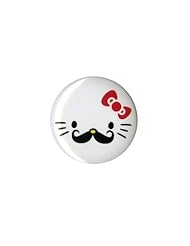
With a little research, I found that I am way behind the times. This is apparently not a new fad....but I began wondering how such a fad can get started because of course when I see this:
I think of this:
![]() |
| Orphan photo of unidentified man with mustache |
I am constantly reminded how archives, in the very broadest sense of the word, connects to just about everything. If I were still an archivist who managed nineteenth century collections, I would dig into my archives and exhibit more photos like this. I'd show my patrons how our mustaches beat them all. (Even Hello Kitty.) And how the fantastical relates to what is real. Who could adequately describe the fine gent pictured above? (He must be shown to be believed.) So, I challenge my colleagues to dig into your archives and jump on the mustache band wagon. And those of you with family collections, do you have a distinguised gent you would like to share? I've created a mustache album on the ArchivesInfo Facebook page and if you post an image on the FB site, I'll add it to the album. Please share whatever info you have about your photo because, of course, the context of the image adds so much to the image itself.
Want to learn more about the mustache fad? See these articles:
State of the 'Stache from The Atlantic.
The Bearded Man. The Wallstreet Journal.
Sunday, March 10, 2013
Pinterest Revisited: Cultural Heritage Professionals Strutting Their Stuff
![]() |
| What does an archivist do aims to educate about primary sources and the field of archives management. |
After my initial post, I wrote another one on "The Pinterest Experiment" and created the board "What does an archivist do?" A collaborative board with over 450 followers, the board has generated a lot of interest and discussion over the past year as I've tried to collaborate to "pin" information about my profession. My goal was to create a visually engaging introduction to the diverse field of archives. It was one of the first boards to try to find a way to share our profession using this new tool. I am now joined by many in the cultural heritage fields creating unique boards. This post highlights a few Pinterest efforts that I have found outstanding.
Rebecca Price of Chick History has recently created the board "The Historic Women of #STEM." It celebrates March as Women's History Month by highlighting a unique population. Her board taps into the month's theme, but also brings together a useful collection of biographies. For my own use, this collection will be a great resource for education. I would love to see more boards like this that highlight an aspect of information that can be used by educators.
Camille Breeze of Museum Textile Services has a fascinating collection of boards that reflect the field of textile conversation. One can learn about the history of textiles through subject focused boards that concentrate on such areas as "Historic Asian Textiles" or the "Historic Embroidery." Camille also includes a board dedicated to her company, allowing us to better appreciate her role in caring for this textile history.
The Museum of the White Mountains is a new institution that opened last month at Plymouth State University. Much to my delight, the museum has already begun using Pinterest to highlight its mission to preserve and promote the history, culture and environmental legacy of the White Mountain region. The set up of their board is thoughtful, providing insight into the "sense of place" offered by this unique, special place located in my state.
![]() | ||||||
| From the Library as Incubator board, "Library Innovation" |
Always on the cutting edge of the library world, the Library as Incubator Project offers a collaborative board of library innovation. Fun, informative and diverse, the board brings together the best of the libraries. More of us should focus on the FUN and use new visual tools such as Pinterest to show how information is not only educational, but also entertaining and cutting edge.
This is just the tip of the iceberg! What boards do you like best? Please share your own comments and favorites.
Sunday, March 3, 2013
Exploring Context in Art: Putting Interpretation Under a Microscope
[Keeping my thoughts on this to blog post length has been difficult. I hope that it will serve as a platform for discussion.]
I recently heard a radio program about artist Charles Krafft, considered one of the pre-eminent artists in the Northwestern United States. He has created Nazi imagery for some time and this work has been considered by art historians and collectors to be "ironic." According to a recently broken news account, Krafft has recently been found to be a Nazi sympathizer and the art world has been turned on its head trying to find a way to handle this scandal.
In the interest of full disclosure as related to this story, I will say that my grandparents escaped from the Holocaust and I have strong feelings regarding "Holocaust deniers." I will also announce my ignorance by saying that I had never before heard of this artist. I have always had a strong interest in the fine arts and with an undergraduate degree in art history, I even once considered a career path as an art historian. However, the subject of interpretation, especially considering contemporary art, has been something I have struggled with for a long time. This case highlights that struggle. It shows how much "interpretation" is based on the "facts" as we know them or as they are presented to us. How much do we really ever know?
To me, Charles Krafft's ideas about his own work shouldn't be the determining factor in deciding if his is art worth viewing. It seems to me that this is part of the problem here. My husband and I discussed this in the car after we heard the radio program. He seemed to think that this new found knowledge about the artist's views of the Holocaust should change our view of his work, whereas I think that this new knowledge should give us new information about the work, but shouldn't fully change it. Krafft's art went for shock value, but is he really talented? Search for images of his work and see what you really think without applying any of Krafft's suggested context to the pieces. [Even with the context I have trouble appreciating this work. It is certainly kitsch and I think combining kitsch with political statements has been way overdone...but perhaps that's just me. After all, I didn't become an art historian. My professor laughed at me for my apparently naive criticisms of many modern movements.]
Hearing this story as an archivist got me thinking about Hilary Jenkinson versus Theodore Schellenberg. Jenkinson believed that the creator of a collection of records was the one who should determine the value of the materials -- who should decide what should be kept as part of the historical record -- and that the archivist was merely a caretaker, whereas Schellenberg's theories promoted the idea that an archivist has an essential role in selecting materials worth keeping. I began to wonder, what role does a curator play? Perhaps this is unfair, maybe our professions shouldn't be compared in this way, but it is something that I have wondered for a long time...is it the role of the curator of contemporary art to listen to the creator of an artwork in order to care for it appropriately or should the curator evaluate the work on its own merit without the input of the creator? Do we know something is "ironic" because the artist says it is or do we know it's ironic because it's good art that somehow conveys the irony even without the artist pointedly telling us?
How does one's belief affect context? How should the artist's view of the world change our perception of his work? Is it possible for a curator to give context to art without the artist's input? If it's not, how much artist input is necessary? It seems to me that there was a bit of discussion about Krafft's world beliefs even before this story "broke." How far can, and should, a curator research to fully understand the context of what they are seeing. If we can, and do, evaluate context with older works of art -- by more objectively understanding the artist's life based on diverse archival documents and research materials -- why can't we do it with today's artist?
Once again, as always, it seems to me that archives have an important role to play in establishing context. I think we are at an important stage in our exploration of material culture. This case further demonstrates the value of cross-professional collaboration. The art historian cannot work in a vacuum with other art historians. Their work spans across disciplines. The Krafft dilemma sheds light on our times. It is a time when professionals are well-aware of the value of creating an image, a public face, in order to promote the work that they do. It is a time of complicated beliefs, polarizing opinions, multi-faceted interpretations of culture. Don't take what one tells you at face value. Dig deeper to fully explore context and be aware that what seems to be true may not always be so. How does one determine when context has been fully explored? I'd love to learn if others had alternate views of Krafft's work. I hope more diverse past interpretations of the art come to light and the story continues. I think we all have a lot more to learn here...
I recently heard a radio program about artist Charles Krafft, considered one of the pre-eminent artists in the Northwestern United States. He has created Nazi imagery for some time and this work has been considered by art historians and collectors to be "ironic." According to a recently broken news account, Krafft has recently been found to be a Nazi sympathizer and the art world has been turned on its head trying to find a way to handle this scandal.
In the interest of full disclosure as related to this story, I will say that my grandparents escaped from the Holocaust and I have strong feelings regarding "Holocaust deniers." I will also announce my ignorance by saying that I had never before heard of this artist. I have always had a strong interest in the fine arts and with an undergraduate degree in art history, I even once considered a career path as an art historian. However, the subject of interpretation, especially considering contemporary art, has been something I have struggled with for a long time. This case highlights that struggle. It shows how much "interpretation" is based on the "facts" as we know them or as they are presented to us. How much do we really ever know?
To me, Charles Krafft's ideas about his own work shouldn't be the determining factor in deciding if his is art worth viewing. It seems to me that this is part of the problem here. My husband and I discussed this in the car after we heard the radio program. He seemed to think that this new found knowledge about the artist's views of the Holocaust should change our view of his work, whereas I think that this new knowledge should give us new information about the work, but shouldn't fully change it. Krafft's art went for shock value, but is he really talented? Search for images of his work and see what you really think without applying any of Krafft's suggested context to the pieces. [Even with the context I have trouble appreciating this work. It is certainly kitsch and I think combining kitsch with political statements has been way overdone...but perhaps that's just me. After all, I didn't become an art historian. My professor laughed at me for my apparently naive criticisms of many modern movements.]
Hearing this story as an archivist got me thinking about Hilary Jenkinson versus Theodore Schellenberg. Jenkinson believed that the creator of a collection of records was the one who should determine the value of the materials -- who should decide what should be kept as part of the historical record -- and that the archivist was merely a caretaker, whereas Schellenberg's theories promoted the idea that an archivist has an essential role in selecting materials worth keeping. I began to wonder, what role does a curator play? Perhaps this is unfair, maybe our professions shouldn't be compared in this way, but it is something that I have wondered for a long time...is it the role of the curator of contemporary art to listen to the creator of an artwork in order to care for it appropriately or should the curator evaluate the work on its own merit without the input of the creator? Do we know something is "ironic" because the artist says it is or do we know it's ironic because it's good art that somehow conveys the irony even without the artist pointedly telling us?
How does one's belief affect context? How should the artist's view of the world change our perception of his work? Is it possible for a curator to give context to art without the artist's input? If it's not, how much artist input is necessary? It seems to me that there was a bit of discussion about Krafft's world beliefs even before this story "broke." How far can, and should, a curator research to fully understand the context of what they are seeing. If we can, and do, evaluate context with older works of art -- by more objectively understanding the artist's life based on diverse archival documents and research materials -- why can't we do it with today's artist?
Once again, as always, it seems to me that archives have an important role to play in establishing context. I think we are at an important stage in our exploration of material culture. This case further demonstrates the value of cross-professional collaboration. The art historian cannot work in a vacuum with other art historians. Their work spans across disciplines. The Krafft dilemma sheds light on our times. It is a time when professionals are well-aware of the value of creating an image, a public face, in order to promote the work that they do. It is a time of complicated beliefs, polarizing opinions, multi-faceted interpretations of culture. Don't take what one tells you at face value. Dig deeper to fully explore context and be aware that what seems to be true may not always be so. How does one determine when context has been fully explored? I'd love to learn if others had alternate views of Krafft's work. I hope more diverse past interpretations of the art come to light and the story continues. I think we all have a lot more to learn here...
Subscribe to:
Posts (Atom)